UAE corporates eye sharia-compliant growth as Islamic banking assets target AED2.6tn by 2031
Islamic banking is moving deeper into mainstream corporate finance as the UAE works towards its national targets – bringing faster digital onboarding, broader market access and early moves into tokenised sukuk and virtual assets
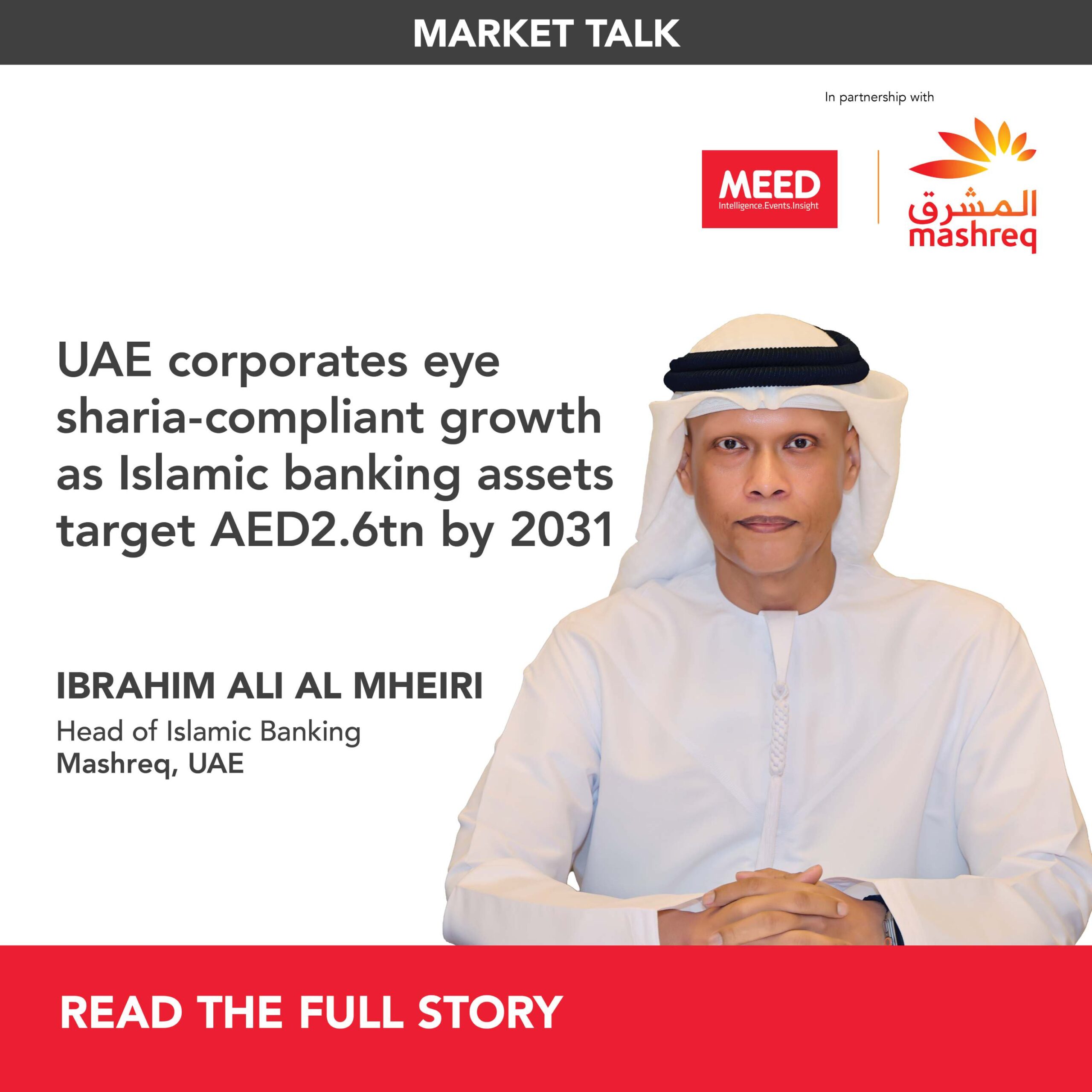
In conversation with Ibrahim Ali Al Mheiri, head of Islamic banking at Mashreq
How is Islamic banking continuing to support corporates and small and medium enterprises (SMEs) across financing, trade and working capital?
There is a clear government mandate, led by the UAE Cabinet and Central Bank, to position the UAE as a global Islamic finance hub. As part of that, Islamic banking assets are targeted to grow from about AED990bn to more than AED2.5tn by 2031.
A significant share of that growth is expected to come from trade, particularly exports and re-exports across the halal economy. Sector-level targets include growing the halal food trade book from about $4bn to $15bn, halal pharmaceuticals from $1.9bn to $3.2bn, and halal cosmetics from $5.1bn to $8.3bn, with further growth expected in modest fashion and halal tourism.
How well-positioned are banks to meet this demand, and how has their Islamic trade finance capability evolved?
Governance sits at the centre of that readiness. Five sharia scholars oversee Mashreq’s Islamic products, supervised by the Central Bank’s Higher Sharia Authority, alongside an internal sharia team. The bank also follows standards set by the Accounting and Auditing Organisation for Islamic Financial Institutions – currently adopted by the UAE and Bahrain and expected to become the global benchmark for Islamic banks.
Documentation and systems have also been revamped, with processes such as the customer’s acceptance of sale now digitised. Two delivery models are in place: relationship managers selling both conventional and Islamic products using the groupwide manpower to offer Islamic solutions first, and a dedicated Islamic banking team whose aim is to grow the Islamic banking share of wallet.
How is the corporate Islamic banking experience being modernised through digital platforms?
Onboarding for Islamic products previously required signing two or three separate sets of documents; this has now been consolidated into a single digital step, triggered by one customer acceptance.
Mashreq’s NEO CORP and NEO BIZ platforms extend that experience across cash management, trade finance and everyday transactions, giving corporate and SME clients a digital journey comparable to conventional banking.
How far does the reach of Islamic banking extend globally?
Demand for sharia-compliant banking now goes well beyond the UAE and the wider Gulf. Mashreq offers Islamic banking products across the region, except in the US and India, where Islamic finance regulations are not yet in place.
This year, the bank participated in a $3.2bn Islamic financing facility for the developer of Riyadh’s King Abdullah Financial District, and has also worked on deals in Qatar, Bahrain, Kuwait, Oman, Turkey and Egypt.
Where is the next opportunity for Islamic banking to play a more strategic role for corporates in the period ahead?
Tokenised and fractional sukuk are high on the agenda, with capabilities being assessed and developed as the market and regulatory environment evolve.
Historically, sukuk issuers have faced high minimum investment thresholds, limited secondary-market liquidity and issuance processes that relied heavily on manual work. Digital technology is now offering new models for issuing, trading and managing these sharia-compliant securities – a shift supported by UAE regulators, including the Dubai Financial Services Authority, the Financial Services Regulatory Authority and the Virtual Assets Regulatory Authority, which have built a forward-looking environment for testing and refining tokenised financial instruments.
Data centres and AI infrastructure are also emerging as a growth area for Islamic financing, as the region’s investment in digital infrastructure creates demand for sharia-compliant funding structures at scale.
On virtual assets, the bank is exploring opportunities with relevant regulators and stakeholders to understand how compliant virtual asset-related services may evolve in the UAE. Discussions currently focus on potential client servicing and financing use cases, subject to applicable regulatory frameworks and approvals.